31 May 2026
- +254 757 360 543
- info@msacarmarket.com
- Ganjoni, Mombasa Kenya
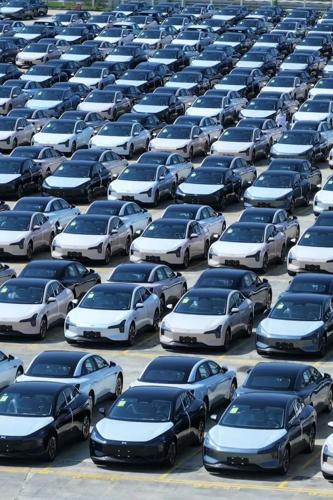
President Ruto has just declared the first 100,000 electric vehicles imported into Kenya fully duty-free. Fuel is above Ksh 200 per litre. And EVs on Kenyan roads have grown by over 2,700% since 2022. Something real is happening — and if you are in the market for a car, you need to understand what it means for you.
Kenya's car market is at an inflection point. For decades, the story has been the same: Japanese imports, Toyota reliability, petrol engines, and a used car market that runs the country. That story is not over — but a new chapter is being written, fast.
At Mombasa Car Market, we work with buyers every day who are asking the same questions: Should I go electric? Is now the right time? What does this government push actually mean for my wallet? This guide gives you the honest, practical answers.
39,324EVs registered in Kenya by 2025
2,700%Growth in EVs since 2022
100,000Vehicles to be imported duty-free
32%Kenya's GHG reduction target by 2030
Speaking from Mombasa on 22 May 2026, President Ruto made a declaration that landed hard across Kenya's transport sector: the first 100,000 electric vehicles imported into Kenya — whether private or public service — will be fully exempt from import duty.
This is not a small discount. Import duty has historically added a significant percentage to the landed cost of every vehicle entering Kenya. Removing it entirely for the first 100,000 units is an aggressive intervention designed to close the price gap between EVs and petrol cars — a gap that has kept most ordinary Kenyan buyers on the sidelines of the EV conversation.
But the duty waiver is only one part of a larger policy picture that has been building for over two years.
Kenya officially launched its National Electric Mobility Policy in early 2026. The policy covers all transport modes — private cars, motorcycles, buses and commercial vehicles — and sets out a clear framework for regulation, infrastructure expansion, and investment incentives. It is anchored in Vision 2030 and the government's climate commitments under the Paris Agreement.
Even before the latest duty waiver, the Finance Bill 2025 had already introduced:
Ruto has also directed the Interior Ministry to procure 3,000 electric vehicles for administrative officers across the country — a move that signals the government is not just talking policy, but putting public money behind it. When state fleets go electric, it accelerates the local support ecosystem: more mechanics trained on EVs, more spare parts available, more charging points installed.
The Kenyan used car market does not change overnight. Toyota is still king. Japanese imports still dominate Mombasa Port. And for the majority of buyers working with budgets under Ksh 2 million, petrol and hybrid vehicles remain the most practical choice today. But the EV push is already reshaping things at the edges — and those edges will move to the centre faster than most people expect.
The fastest and clearest sign of Kenya's EV shift is not cars — it is boda bodas. Electric motorcycle registrations jumped from 678 units in 2022 to approximately 24,000 by 2025. That is a category that has already crossed a tipping point. For bodaboda operators paying Ksh 200 per litre for petrol, the economics of switching to electric are not a future promise — they are today's reality.
The duty-free declaration covers PSVs as well as private vehicles. Matatu and bus operators running high-mileage city routes are among the buyers most exposed to fuel costs. An electric bus or matatu that significantly cuts daily fuel spend changes the unit economics of public transport. Expect early adopters in Nairobi and Mombasa to test this aggressively over the next 12 to 18 months.
Buyers who want lower running costs but are not ready to go fully electric are already shifting to hybrids — and the market is responding. The Nissan Note e-Power, Toyota Aqua and Honda Fit Hybrid are among the fastest-growing models in Kenya's used car market. At Ksh 200 per litre, a hybrid that does 30+ km per litre saves serious money over a 12-month period. These models benefit from Kenya's existing hybrid tax incentives: 10% excise duty versus 25% for standard petrol cars.
The duty waiver applies to imported EVs — including new models. Brands that were previously priced well out of reach for ordinary Kenyan buyers will now land at prices that make genuine comparisons possible. Expect Chinese EV brands in particular to move aggressively into this space. Ruto visited CATL — one of the world's largest EV battery manufacturers — during a 2025 trip to China, signalling that Kenya is actively courting supply-side investment, not just demand-side incentives.
What This Means for You as a Buyer
If you are buying a car in 2026, you are not choosing between petrol and electric in a vacuum. You are choosing within a market that is being actively reshaped by government policy, fuel prices and global supply shifts. Understanding those forces — and how fast they are moving — is the difference between a decision you feel good about in three years and one you regret.
At Mombosa Car Market, we believe in giving buyers the full picture — not just the exciting headlines. Kenya's EV transition is real and moving fast. But the honest assessment is that significant challenges remain, and buyers need to weigh them before making decisions.
This is the single biggest practical barrier to EV adoption for most Kenyan buyers right now. Charging points outside Nairobi and a handful of major towns are sparse. Long-distance travel — upcountry routes, coastal drives, inter-city trips — remains complicated without reliable charging infrastructure along the way. The government has committed to rolling out charging points on all major highways and in all urban centres. That commitment is important. But it has not yet been fulfilled at the scale needed to make EVs genuinely practical for the majority of Kenyan drivers.
The duty waiver will reduce this gap meaningfully — but it will not close it entirely. A comparable new electric vehicle still costs more upfront than a used petrol car with similar practicality. For buyers who can absorb that upfront premium and hold the vehicle long enough to recover it through fuel savings, the maths works. For buyers stretched on initial purchase price, petrol and hybrid used cars remain the more accessible entry point.
Kenya's mechanic ecosystem has been built around petrol and diesel engines over decades. Electric drivetrains require different knowledge, different tools and different parts. While this expertise is growing — particularly in Nairobi — it is not yet evenly distributed across the country. Buyers in towns outside major urban centres should carefully consider proximity to qualified EV service centres before committing to a fully electric vehicle.
If you are a buyer whose budget sits in Kenya's most active used car range — Ksh 500,000 to Ksh 2,000,000 — you will find very limited used EV options today. The current EV stock in Kenya is mostly new or near-new, sitting at price points that exclude most of the market. It will take several more years before affordable used EVs reach the volumes that make them a practical mainstream option at Kenya's typical used car price points.
The honest answer depends entirely on your situation. Here is how to think through it:
For most Kenyan buyers in 2026, a used hybrid is the smart bridge position. You get significantly lower fuel costs than a standard petrol car, access to existing tax incentives, strong resale value, and none of the charging infrastructure dependency that makes full EVs complicated outside major cities.
Chinese manufacturer BYD has been making significant moves in East Africa. The Atto 3 is likely to be one of the first full EVs to land at genuinely competitive prices under the new duty waiver. Watch this space carefully over the next 6 to 12 months as duty-free imports start clearing Mombasa Port.
The Nissan Leaf has been the closest thing Kenya has had to a mainstream used EV. Range limitations on older models (2013–2017 generation) have been a concern, but the later generations address this. As Kenya's charging infrastructure grows, the Leaf becomes more practical for daily urban use.
Not a full EV — the Note e-Power uses a petrol engine purely as a generator to power an electric motor. No plug required. It drives with the smoothness of an EV and returns 24 to 37 km per litre in real-world Kenyan driving. For buyers who want EV driving experience without charging infrastructure dependency, this is currently the most practical option on Kenya's market.
Toyota has been deliberately conservative about its EV push globally, but the bZ4X represents its serious entry into the space. Given Toyota's dominant position in Kenya's market and its existing service network across the country, watch for the bZ4X to gain traction quickly once pricing comes into range under the new duty waiver.
Does Ruto's 100,000 duty-free limit apply to used EVs or only new ones?
The declaration covers EVs imported into Kenya — the announcement referenced both private and public service vehicles but did not explicitly restrict to new vehicles only. As implementation details emerge through Kenya Revenue Authority guidelines, this will become clearer. Watch official KRA announcements for confirmation.
How many EVs are currently registered in Kenya?
As at 2025, Kenya had cumulatively registered 39,324 EVs — up from 1,378 in 2022. Electric motorcycles represent the largest share of that growth, driven by bodaboda operators responding to high fuel costs.
Where can I charge an EV in Kenya?
Charging infrastructure is currently concentrated in Nairobi, with growing coverage in Mombasa and a handful of other towns. Major commercial properties, hotels and some petrol stations have started installing chargers. Home charging — using a standard socket or a dedicated home charger — remains the most practical solution for most current EV owners.
What is the cheapest practical EV available in Kenya right now?
The used Nissan Leaf (2014–2016 generation) has appeared in Kenya at prices around Ksh 1,200,000 to Ksh 1,800,000 depending on condition and battery health. Range on older Leaf models is a genuine consideration — battery degradation is real and varies significantly by vehicle. Always get a battery health check before purchasing any used EV.
Will petrol cars lose resale value as EVs grow?
Not meaningfully in Kenya's near-term market. The used petrol and hybrid car market in Kenya is large, deeply established, and serves buyers at price points EVs cannot yet reach. Resale value for well-maintained, popular models like the Toyota Axio, Harrier and Prado will remain strong for the foreseeable future. Reassess this question in three to five years as the EV ecosystem matures.
At Mombasa Car Market, we list verified vehicles from physically-present dealers across Kenya. No brokers, no anonymous listings, no hidden fees. Browse petrol, hybrid and electric options all in one place.
Browse All Cars at MSACarMarket.com
Call / WhatsApp: +254 757 360 543 | Email: info@msacarmarket.com | Ganjoni, Mombasa