08 Jun 2026
- +254 757 360 543
- info@msacarmarket.com
- Ganjoni, Mombasa Kenya
Kenya's electric future is not coming. It is already here.
The shift to electric vehicles in Kenya is no longer a distant aspiration for tech enthusiasts or a government talking point. It is happening right now, accelerated by massive international funding, a landmark national policy, and the unstoppable rise of affordable Chinese EV brands entering the East African market.
And Kenya's car scene — from the boda boda riders of Kisumu to the modified Subaru community on Nairobi's Thika Superhighway to the daily commuters navigating Mombasa's Nyali road — is adapting faster than most people expected.
In this guide, the team at Mombasa Car Market breaks down the real progress Kenya has made, the institutions driving the transition, and what it all means for Kenyan car buyers in 2026.
The European Union has committed Ksh 50 billion — approximately $378 million — directly into the electrification of Kenya's public transport infrastructure. This is not a pledge or a memorandum of understanding. This is a financial commitment large enough to fundamentally rewire how Nairobi and other major cities move people.
The funding is specifically targeted at building bus rapid transit charging infrastructure and improving the cost-effectiveness of electric public transit networks — the backbone that private EV adoption depends on.
When the EU puts Ksh 50 billion into a country's EV ecosystem, it sends a signal to every private investor, every dealership, and every car buyer: this transition is real, it is funded, and it is not reversing.
Before looking at policy and institutions, it is worth understanding what has already happened on the ground — because the growth is extraordinary.
In 2019, Kenya had just 194 registered electric vehicles nationwide. Growth was modest through 2020 and 2021. Then the tipping point arrived. Between 2022 and 2023, registrations more than tripled in a single year. Following the Finance Act 2023 incentives — focused primarily on electric motorcycles and buses — annual EV registrations surged from 4,048 to 28,754 between 2023 and 2025. Cumulative registrations jumped from just 1,378 before 2023 to over 43,000 by the end of 2025 — a 31-times expansion in just three years.
Kenya is not following Africa's EV story. It is leading it, sitting well ahead of regional neighbours Uganda, Tanzania, and Rwanda in total registered EVs.
The single most significant development of 2026 came on 3 February, when Kenya's Ministry of Roads and Transport officially launched the National Electric Mobility Policy — the most comprehensive EV framework the country has ever produced.
The policy moves Kenya's EV sector from fragmented pilot projects into a structured national economic strategy. By shifting transport energy reliance to domestic electricity, it directly targets Kenya's massive petroleum import bill that has been straining foreign exchange reserves.
The incentives packaged into the policy are practical and far-reaching:
President Ruto has also announced plans to remove import duties on 100,000 electric vehicles — described by the Electric Mobility Association of Kenya (EMAK) as the largest fiscal commitment to e-mobility in Kenya's history, if fully enacted into law.
While many Kenyans were still debating whether EVs were "ready" for local conditions, BYD electric buses assembled locally by startup BasiGo were already ferrying passengers across Nairobi. Under the BasiGo-BYD partnership, 17 electric buses were put into operation in the capital, with each bus reducing up to 50 tonnes of carbon emissions per year.
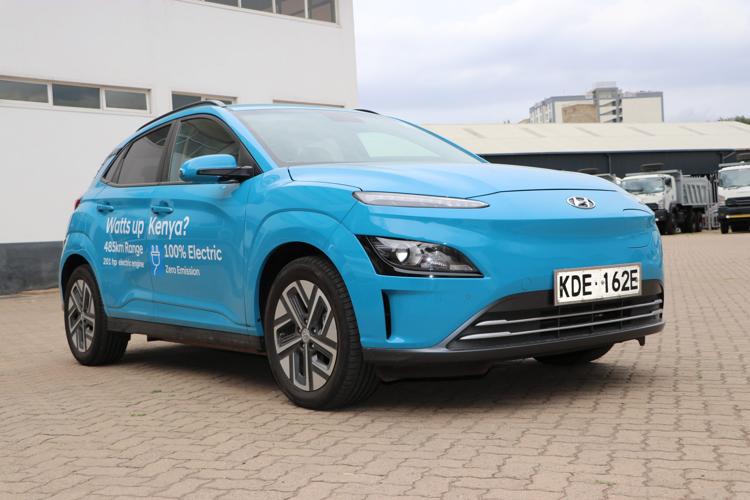
On the private car side, the 2026 BYD lineup available in Kenya includes the Dolphin, Seagull, and Qin Plus EV — practical, affordable entries that make electric driving financially accessible for the first time at this scale. Prices for the BYD Dolphin start from around KSh 2.4 million, placing it within reach of the same buyers who would previously have been shopping for a mid-range Japanese import.
No EV revolution works without electricity infrastructure — and Kenya Power has stepped up decisively.
In July 2023, monthly revenues from EV charging stood at under KSh 900,000. By February 2026, that figure had peaked at KSh 35.25 million per month. Electricity sales to the e-mobility sector grew 113-fold in under three years. Kenya Power has also announced plans to convert 2,000 of its own petrol and diesel vehicles to electric over the next four years — a commercial signal as much as an environmental one.
New Kenya Power-operated charging stations have launched in Voi and Nyali, Mombasa, with the utility also rolling out e-bikes for its own meter readers in Nakuru and Mombasa Island. For Mombasa drivers especially, this matters. The Coast has historically lagged behind Nairobi in EV infrastructure — but that gap is closing fast.
Kenya Power operates a dedicated e-mobility electricity tariff — KES 16 per unit during peak hours and KES 8 during off-peak — making home and commercial charging genuinely affordable for everyday Kenyans.
Kenya's car community has always been passionate, resourceful, and opinionated. The same community that fills rally stages in Naivasha, wraps Subaru Foresters in matte black, debates JDM specs at Sunday meets, and lines up for the Concours d'Elegance every year is now paying close attention to what is pulling into the parking lot alongside them.
EV owners in Kenya are already exploring custom battery range extenders. Hybrid owners are seeking eco-friendly wraps. Modified car garages in Nairobi and Mombasa are beginning to invest in EV diagnostic equipment. The customisation instinct that defines Kenyan car culture runs just as deep in the electric community as it does in the petrol one.
And homegrown companies are building on that energy. TAD Motors' DHAHABU is crafted primarily in Kenya — only batteries, electronics, and select components are imported from China — aiming for up to 90% local content. This is not an import story. This is a Kenyan car, built by Kenyans, for Kenyan roads.
Roam — the Swedish-Kenyan manufacturer formerly known as Opibus — has placed approximately 3,500 electric motorbikes on Kenyan roads since 2017 and manufactures electric buses at its Nairobi facility. Roam has partnered with QuickMart to establish charging stations at retail locations and plans to introduce universal fast chargers in Machakos, Thika, Kiambu, and Kajiado in 2026.
Kenya's EV ambitions have not gone unnoticed by the global financial community. Institutions such as the Green Climate Fund, the African Development Bank, and the Global Environment Facility are increasingly supporting clean transport initiatives in Kenya, providing grant and concessional financing that amplifies domestic investment and de-risks early-stage infrastructure projects.
This international backing gives Kenya's EV ecosystem a stability that purely commercially funded programmes often lack — and signals to private investors that the country is serious about the long-term transition.
All of this progress translates into real, practical benefits for anyone in the Kenyan car market in 2026:
Not every Kenyan buyer is ready for a fully electric vehicle — and that is perfectly fine. Here is an honest way to think about it:
An EV makes sense for you if:
Stick with petrol or hybrid for now if:
Hybrid vehicles — the Nissan Note e-Power, Toyota Prius, and Honda Fit Hybrid — remain an excellent middle ground for Kenyan buyers who want real fuel savings without the range anxiety or infrastructure concerns of a fully electric vehicle.
Kenya's EV momentum is real — but it is not without turbulence. The Finance Bill 2026 proposes reinstating the standard 16% VAT on imported electric vehicles, lithium-ion batteries, and electric bicycles — reversing tax breaks that have been central to the sector's growth. This comes just months after the national e-mobility policy was launched with fanfare.
EMAK and industry players are actively pushing back in parliamentary submissions. The outcome will shape EV pricing well into 2027. Buyers who are seriously considering making the switch are best advised to move while the current incentives remain in place.
As Kenya's EV ecosystem matures, Mombasa Car Market is expanding its verified listings to include electric and hybrid vehicles from trusted dealers across the Coast region. Whether you are considering a used Nissan Leaf as an affordable first EV, a BYD Dolphin for the family, or a Nissan Note e-Power hybrid as a stepping stone into cleaner motoring, our platform connects you directly with verified dealers — no brokers, no middlemen, no hidden fees.
Browse electric and hybrid vehicles on Mombasa Car Market → | WhatsApp us: +254 757 360 543 | info@msacarmarket.com
Kenya's EV revolution is not happening in spite of the country's car culture — it is happening because of it. Kenyans have always been passionate, resourceful, and adaptable when it comes to their vehicles. That same energy is now driving one of Africa's most impressive clean transport transitions.
The government has laid the policy foundation. The EU has put in the money. Homegrown companies are building local solutions. And everyday Kenyans — on two wheels and four — are making the switch in numbers that are impossible to ignore.
The road ahead is electric. And Kenya is already on it.